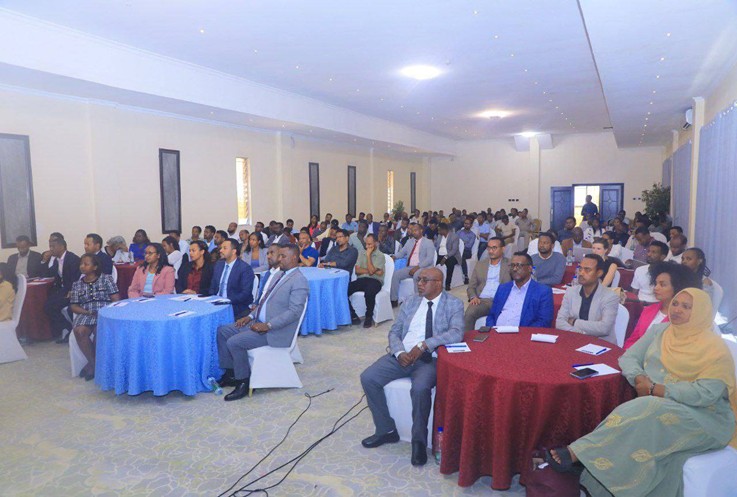
Under the theme “Born to Survive and Thrive,” a two-day National Immediate Kangaroo Mother Care (iKMC) Launch and Advocacy Workshop was organized by the Ministry of Health in collaboration with the World Health Organization, Sidama Regional Health Bureau, Center for Implementation Sciences in Health Addis Ababa University, and the College of Medicine and Health Sciences Hawassa University. The workshop marked a major national milestone, officially launching the iKMC program nationwide and confirming Ethiopia’s commitment to reductions in neonatal mortality.
The workshop aimed to formally introduce the iKMC program at national level, show commitment from regional health bureaus and hospitals, disseminate global evidence and national implementation research findings on IKMC and promote stakeholder engagement to support scale-up. More than 100 participants attended this workshop, including senior Ministry leaders, regional health bureau heads, hospital representatives, and different stakeholders.
High-level leadership emphasized the importance of iKMC as a low-cost, high-impact intervention that can highly reduce newborn mortality. Speakers highlighted Ethiopia’s progress in improving maternal and newborn health outcomes while stressing the need to strengthen quality of care, expand capacity building, improve infrastructure and equipment availability, and ensure equitable access to lifesaving services. The need for coordinated action among health professionals, regional leaders, communities, and partners to mobilize resources and sustain implementation efforts was underlined.
Sessions during the first day included keynote addresses and presentations on global evidence, national implementation research findings, and cost considerations for scaling up iKMC. These sessions demonstrated how implementation research has informed adaptation of the model to the Ethiopian context and provided practical guidance for nationwide expansion. Facility visits to selected hospitals in Hawassa offered participants learning opportunities, showcasing how iKMC has been integrated into existing neonatal care units through practical innovations. The visits created a chance to discuss and exchange learnings between phase-one implementation sites and facilities preparing to initiate the scale up.
The second day focused on collaborative group work, bringing together representatives from regional health bureaus, hospitals, and experienced implementation sites to develop context-specific action plans. This planning process strengthened ownership, accountability, and readiness for implementation in the upcoming phase.
Overall, the workshop served as a national platform to launch the Immediate Kangaroo Mother Care program, share evidence and implementation lessons, and align leadership and partners around a shared vision. It strengthened a national commitment to ensuring that every newborn in Ethiopia is given the opportunity not only to survive, but to thrive.